Creating a home office that feels both cozy and productive can greatly improve your work-from-home experience. Whether you’re freelancing, telecommuting, or managing personal projects, a thoughtfully designed workspace can enhance focus while keeping you comfortable throughout the day. In this post, we’ll explore practical tips to help you achieve that perfect balance.
Choose the Right Location
The foundation of a great home office starts with selecting the ideal spot.
– Low Distraction Area: Pick a quiet corner or a room away from heavy household traffic.
– Natural Light: Position your desk near a window to take advantage of natural light, which can boost mood and reduce eye strain.
– Space Considerations: Ensure there’s enough room for your desk, chair, and any other essentials without feeling cramped.
Invest in Comfortable Furniture
Comfort is key when spending long hours working at home.
Desk Selection
– Choose a desk that fits your space and work needs. Adjustable desks that allow sitting and standing can add flexibility.
– Consider desks with built-in storage to keep essentials within easy reach.
Chair Choice
– An ergonomic chair supports good posture and reduces discomfort.
– Look for chairs with adjustable height, lumbar support, and comfortable padding.
Organize Your Workspace Efficiently
Clutter can distract and hinder productivity. Use organization strategies to maintain a neat environment.
– Storage Solutions: Use shelves, filing cabinets, or storage boxes to keep papers and supplies orderly.
– Cable Management: Keep cords tidy with clips, trays, or cable sleeves to avoid tangles and hazards.
– Minimalism: Keep only what you need on your desk surface to maintain focus.
Incorporate Warm and Cozy Elements
Adding cozy touches can make your home office inviting and comfortable.
– Soft Textures: Place a small rug under your desk or add cushions to your chair.
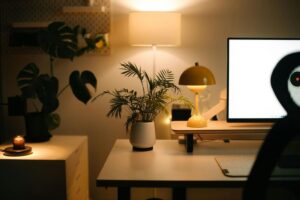
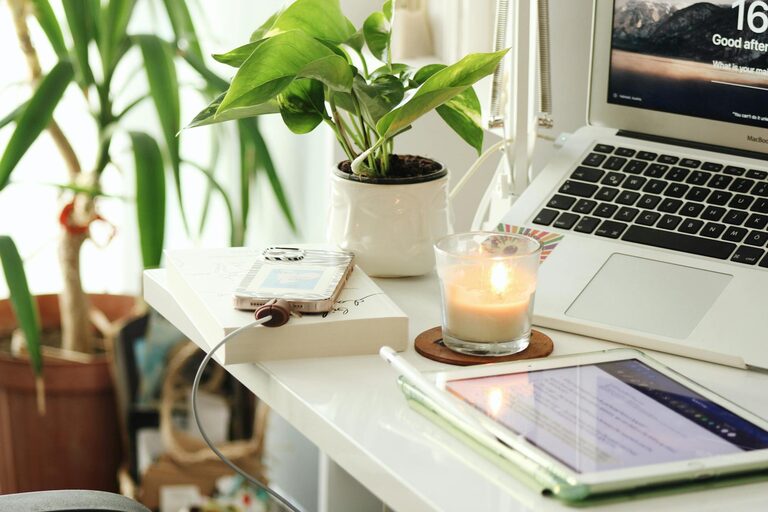
– Personal Touches: Include photos, plants, or art that inspire and soothe.
– Lighting: Use warm-toned lamps or fairy lights for ambient lighting especially when natural light is low.
Optimize Lighting for Productivity
Good lighting reduces eye strain and maintains alertness.
– Use a mix of natural, overhead, and task lighting.
– Position your monitor to avoid glare from windows or lights.
– Consider adjustable desk lamps for focused work.
Maintain Good Air Quality
Fresh air helps keep your energy levels up.
– Position your workspace near a window you can open.
– Use an air purifier or keep houseplants to improve air quality.
Set Boundaries and Rules
Creating mental boundaries helps differentiate work time from personal time, even if your office is at home.
– Establish set work hours.
– Communicate your schedule to others in your household.
– Use noise-canceling headphones if needed to block distractions.
Use Technology Wisely
Leverage technology to improve organization and productivity.
– Use calendar apps and task management tools to keep track of deadlines.
– Invest in quality equipment like a good monitor, keyboard, and microphone to improve comfort and communication.
– Keep backups of important documents to avoid data loss.
Personalize Your Space Without Overcrowding
While personalization adds comfort, balance it with functionality.
– Choose decorations that motivate or calm you.
– Avoid excess items that distract or clutter your view.
Regularly Declutter and Refresh
Your home office should evolve with your needs.
– Schedule weekly or monthly cleanups.
– Update your setup as technology or work habits change.
– Rotate art or plants to keep the space feeling fresh.
—
Creating a cozy and productive home office doesn’t need to be complicated. By carefully selecting your space, investing in comfortable furniture, and organizing thoughtfully, you can design a workspace that supports your daily tasks while nurturing your well-being. Remember, the goal is an environment where you enjoy working and can do so efficiently—your perfect home office awaits!