Creating a home office that is both relaxing and productive can transform your daily work experience. With many people working remotely or juggling multiple tasks at home, having a comfortable and efficient workspace is more important than ever. In this post, we’ll explore practical tips and ideas to help you design a home office that supports your focus and well-being.
Choose the Right Location
Finding the ideal spot for your home office is the first step. Here are some things to consider:
– Natural Light: Select a space with plenty of natural light to boost mood and reduce eye strain.
– Low Traffic: Pick a quiet area to minimize distractions from family members or roommates.
– Space Requirements: Make sure the space is large enough for your desk, chair, and any extra storage you need.
If you don’t have a separate room, a corner with some room dividers or shelving can create a distinct boundary for work.
Invest in Ergonomic Furniture
Comfort is key to maintaining productivity over long hours. Ergonomic furniture supports good posture and reduces discomfort.
– Chair: Choose a chair with adjustable height, lumbar support, and cushioning.
– Desk: Ensure your desk height allows your arms to rest comfortably at a 90-degree angle.
– Keyboard and Monitor: Position your keyboard so wrists stay straight. The top of your monitor should be at or just below eye level.
A good setup reduces the risk of aches and promotes better focus.
Keep Your Workspace Organized
An organized desk and surrounding area can help reduce stress and increase efficiency.
– Declutter: Only keep items you use daily on your desk.
– Storage Solutions: Use shelves, drawers, or organizers to keep papers, gadgets, and office supplies neatly stored.
– Cable Management: Use clips or covers to keep cables tidy and out of the way.
At the end of each day, take a few minutes to tidy your workspace to start fresh the following morning.
Personalize Your Environment
Adding elements that bring you joy or calm can make your workspace more inviting.
– Plants: Indoor plants improve air quality and add a touch of nature.
– Artwork: Choose calming or inspiring art pieces that motivate you.
– Color Scheme: Use colors known to promote focus, like soft blues or greens, or energize with pops of yellow.
Just be careful not to overdo it—too many decorations might become distracting.
Control Lighting and Temperature
Proper lighting and temperature affect both comfort and productivity.
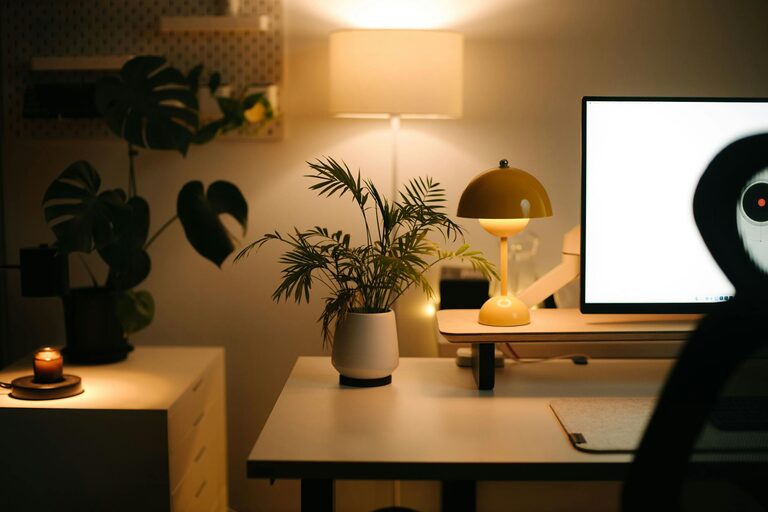
– Lighting: Combine natural light with adjustable task lighting. Avoid harsh overhead lights or glare on your screen.
– Temperature: Keep the room comfortably cool or warm, depending on your preference. Consider a small fan or space heater if needed.
Adjusting these elements can help you avoid fatigue and maintain concentration.
Establish a Routine and Boundaries
A well-designed space is most effective when paired with good work habits:
– Designate Work Hours: Set specific times to start and finish work to avoid burnout.
– Take Breaks: Stand up, stretch, or step outside briefly to refresh your mind.
– Limit Distractions: Use noise-cancelling headphones or white noise apps if background noise is a problem.
Creating boundaries helps your mind associate the space with work and focus.
Use Technology Wisely
Technology can either help or hinder your productivity, depending on how it’s managed.
– Keep Devices Updated: Ensure your computer and software are running smoothly.
– Organize Digital Files: Maintain a logical folder structure on your computer.
– Use Productivity Tools: Apps for task management, time tracking, or note-taking can keep you on track.
– Minimize Notifications: Disable non-essential alerts during work hours.
Having a reliable and clutter-free digital environment complements a tidy physical space.
Maintain Your Workspace Regularly
Regular upkeep maintains both comfort and efficiency.
– Clean Surfaces: Dust and wipe down your desk, keyboard, and monitor weekly.
– Organize Notes and Files: Review and archive documents regularly.
– Assess Comfort: Periodically check your chair and desk settings to adjust as needed.
A clean, refreshed workspace encourages good habits and positive energy.
—
Creating a home office that balances relaxation and productivity involves thoughtful choices about space, furniture, lighting, and routines. By applying these tips, you can craft a workspace that supports your work goals and well-being, making each day more enjoyable and efficient. Whether you work full-time from home or need a spot for occasional tasks, a well-planned office setup makes all the difference.